
Practical backup plans for caregivers—because care needs to work on the days you can’t do everything
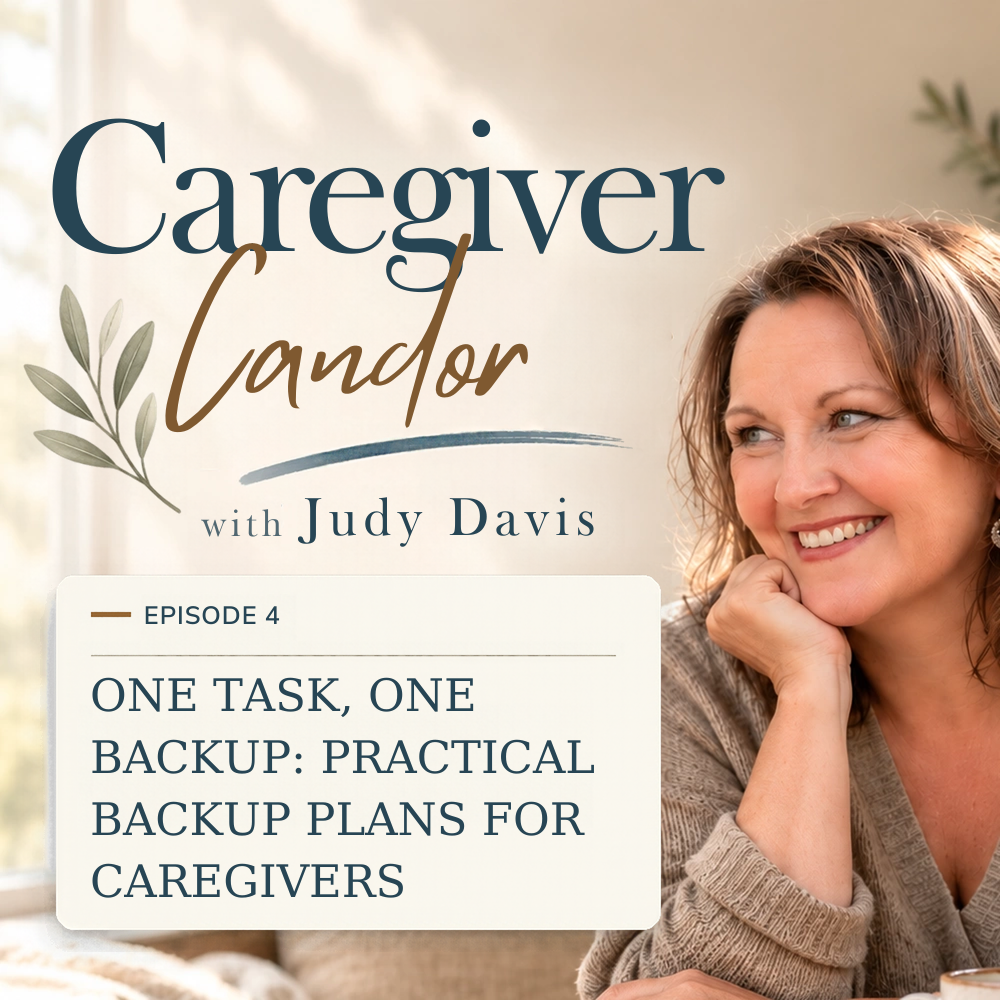
Find us wherever you listen to podcasts. Search Caregiver Candor. 🎧
Inside This Episode
If everybody’s plan is “Call the caregiver,” I have one question. Who does the caregiver call? When you’re sick. When you have to work. When the car won’t start. When you have an appointment of your own that you’ve already rescheduled twice. Sometimes the problem isn’t that you don’t understand the care plan. You understand it perfectly.
The problem is that every part of it depends on you.
You’re the ride, the reminder, the paperwork detective, and the person everyone expects to answer the phone. Then someone says, “You just need to ask for help.” Well, thank goodness. Why didn’t we think of that? Asking matters. But “just ask” skips over the difficult part: who can actually help, what can they take on, and will they follow through?
Let’s Talk About It
In Episode 4 of Caregiver Candor, we’re talking about what happens when you’ve become the entire plan—and how to start building backup you can actually use. A thoughtful text can help you feel less alone. But it doesn’t arrange Thursday’s ride. Backup means someone has agreed to handle a specific responsibility when you can’t. They know what’s needed, when it needs to happen, and what to do if something changes. That distinction matters when your ability to get through the day depends on more than good intentions.
Start with one responsibility that depends entirely on you.
Think about yesterday. Did you check a portal message while making breakfast? Call the pharmacy during your lunch break? Rearrange your workday around an appointment? Some caregiving responsibilities become so routine that you stop counting them. But if nobody else knows they need to happen, they still depend on you even when you’re unavailable. Before trying to find “more help,” ask:
“What is one responsibility I am currently the only person handling?”
Start there. One task is easier to explain, assign, and plan around than “everything I do.”
Different responsibilities need different kinds of backup.
It helps to think in three layers:
Everyday backup: Someone who can handle a grocery run, meal, ride, or another routine task with the right information.
Disruption backup: A plan for when you get sick, have to be away, or cannot do what you normally do.
Professional backup: The appropriate care team contact or service for responsibilities and questions that require professional guidance.
Someone willing to bring dinner may not be able to safely provide hands-on care. A willing helper still needs the ability, information, and any required training for the task. Include the person receiving care in these conversations whenever possible. Their preferences and privacy matter, too.
Turn “anything” into an actual agreement.
“Let me know if you need anything” sounds generous, but when you’re exhausted, anything is another assignment. Now you have to identify the task, choose the person, explain the details, and figure out whether they really meant it. Make the request smaller and clearer.
Words you can use:
“Could you drive us to the appointment on Thursday morning and wait while we’re inside?”
Or:
“Could you bring dinner on Tuesday? Nothing fancy. We just need one less thing to think about.”
Give the person a specific task and a specific time. Then get a clear answer. A real no is more useful than a vague maybe you’ve built your day around. Once someone agrees, confirm the details and share the information they need. A backup arrangement shouldn’t require you to manage every step while you’re supposed to be handling something else.
What if there isn’t anyone to ask?
This is where “build your village” advice can feel especially useless. Some caregivers don’t have nearby family. Some have people who offered and disappeared. Others need help that an untrained friend cannot provide. Start by naming the actual gap.
Words you can use with a care coordinator, social worker, or organization involved in the care:
“I don’t have anyone who can cover this responsibility. What services or alternatives can we explore?”
Ask what happens to the plan if you’re unavailable. Availability, eligibility, and cost may limit the options, and naming the gap won’t magically create a service. But the gap needs to be visible. Your silence can be mistaken for an arrangement that’s working.
The Truth in Between: Being indispensable isn’t the same as being supported.
When everyone relies on you, it can start to feel like proof that you’re doing a good job. But if everything falls apart when you’re unavailable, the plan has no room for you to be human. You will get sick. You will have competing responsibilities. You will need time when nobody is asking you to solve something. Your commitment should not be measured by whether you can keep going without backup.
Care needs to be workable beyond whatever you can push through today.
Put Into Practice
Choose one task this week, make one specific request for backup, and confirm who will do what and when.
Bringing It Home
One confirmed arrangement won’t solve everything. But it means one less responsibility depends entirely on you. And if you’re a professional supporting families, ask more than who the caregiver is. Ask: “What happens when that person isn’t available?”
The answer belongs in the plan. The person you’re caring for matters. And so do you.
_____
If this episode put words to something you’ve been carrying, give it a like and share it with someone who needs to hear it. Follow Caregiver Candor wherever you listen so the next honest conversation is there when you need it.
And remember, you don’t have to figure all of this out alone. Our resources, social media feeds and the blog are full of practical tools, honest conversations, and the info you need to help you care for someone without disappearing in the process.